
By Pavel Stich / COPYWRITER & SEO SPECIALIST
Last Updated: January 2026
It is a scenario that millions of Americans face every month: The rent is due on the 1st, but your paycheck doesn’t arrive until the 5th. The car breaks down, the medical bill arrives, or the utility company threatens a shut-off. In these moments of acute financial pressure, the promise of “fast cash” from a payday loan can feel like a lifeline.
However, in 2026, the landscape of short-term lending has shifted dramatically.
Applying does NOT affect your credit score!
With the rise of Artificial Intelligence in underwriting and the proliferation of “fintech” apps, accessing money is easier than ever. Yet, the risks remain potent. Traditional payday loans continue to carry Annual Percentage Rates (APRs) that can exceed 400%, trapping unsuspecting borrowers in a cycle of debt that can last for years.
In this ultimate guide, we dissect the modern payday loan industry. We will explain exactly how they work, expose the mathematical reality of their fees, and, most importantly, provide you with sophisticated, cheaper alternatives that provide instant liquidity without the predatory price tag.
What Is a Payday Loan? (The 2026 Definition)
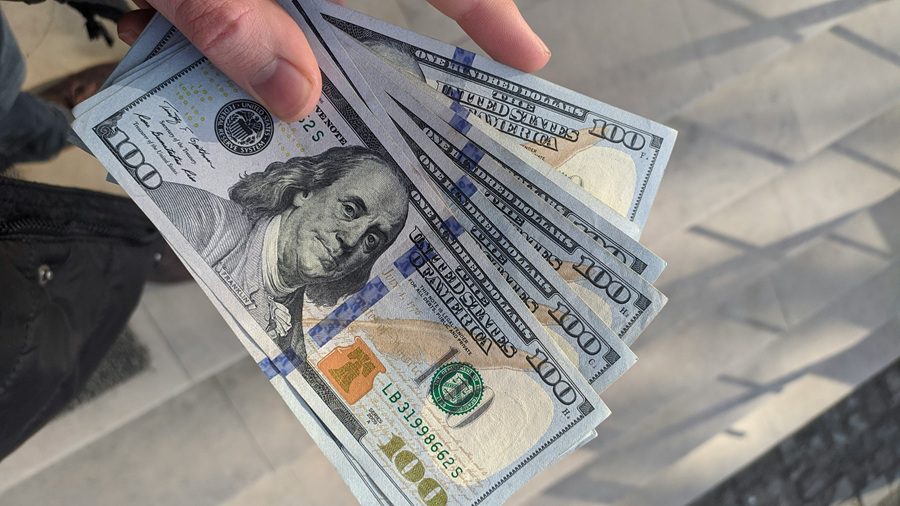
At its core, a payday loan is a short-term, unsecured loan designed to be repaid in full on the borrower’s next payday.
Historically, these were small amounts ($500 or less) obtained from neon-lit storefronts. Today, the industry has moved almost entirely online. In 2026, a “payday loan” often serves as an umbrella term for:
- Single-Payment Loans: You borrow $300 today and pay back $345 in two weeks.
- Installment Payday Loans: High-interest loans repaid over 3 to 6 months.
- Line of Credit: A revolving balance with extremely high fees.
The Mechanism:
To secure the loan, you provide the lender with a post-dated check or, more commonly, authorization to electronically debit your checking account (ACH) on a specific date. Unlike traditional loans, payday lenders generally do not perform hard credit checks, making them accessible to the 100 million Americans with sub-prime credit.
The True Cost: Understanding the APR Trap
The most dangerous aspect of a payday loan is how the price is presented. Lenders often advertise a “fee” rather than an interest rate.
- The Pitch: “Borrow $100 for just $15.”
- The Reality: Paying $15 to borrow $100 for two weeks sounds reasonable. However, if you calculate that as an Annual Percentage Rate (APR)—the standard metric for all other loans—the math is terrifying.
The 2026 Payday Math:

Compare this to a credit card (24% APR) or a bad credit personal loan (30% APR). Consequently, payday loans are mathematically the most expensive legal way to borrow money in the United States.
Need a cheaper option? You can often borrow small amounts for free. Read our guide on Best No Credit Check Loans & Cash Advance Apps.
Applying does NOT affect your credit score!
Online Payday Loans vs. Direct Lenders
When you search for “payday loans online,” you will encounter two types of entities. Distinguishing between them is vital for your data security.
1. Direct Lenders
These companies lend you their own money. They handle the application, funding, and repayment. Using a direct lender is safer because your personal data stays in one place.
- Examples: Check ‘n Go, Ace Cash Express, OppLoans.
2. Lead Generators (Brokers)
These websites do not lend money. Instead, they collect your Social Security Number and bank details, then “auction” your application to dozens of different lenders.
- The Risk: You may be bombarded with spam calls, emails, and text messages for months. Always look for the disclaimer “We are not a lender” in the footer of the website.
Safety First: If you need funds quickly, prioritize reputable sources. See our curated list of Small Payday Loans Online: No Credit Check.
The Danger Zone: Rollovers and the Debt Cycle
The business model of predatory lenders relies on you not paying the loan back on time.
If you cannot afford to repay the $345 on payday (because you still have rent and food to buy), the lender will offer a “Rollover” or “Renewal.” You pay just the $45 fee, and the loan is extended for another two weeks.
- Result: You have paid $45, but you still owe the original $300.
- The Cycle: If you roll over the loan four times, you have paid $180 in fees, yet the principal debt hasn’t decreased by a single cent.
This is how a $300 emergency becomes a $2,000 burden. If you are currently trapped in this cycle, stop borrowing immediately and seek an exit strategy.
Breaking Free: Learn the legal methods to stop payment and consolidate this debt in our guide: How to Get Out of Payday Loan Debt Legally.
Smarter Alternatives for 2026
If you have bad credit, you might feel like payday loans are your only option. They are not. In 2026, financial technology offers superior alternatives that are faster, cheaper, and safer.
1. Cash Advance Apps (0% Interest)
Apps like EarnIn, Dave, and Brigit have revolutionized borrowing. They allow you to access your earned wages before payday.
- Cost: $0 interest (optional tips or small subscription fees).
- Limit: Typically $100 to $750.
- Why it’s better: It is literally hundreds of times cheaper than a payday loan.Comparison: Payday Loan Apps vs. Cash Advances.
2. Bad Credit Personal Loans (Installment)
For amounts over $500, look for an “Installment Loan” rather than a payday loan. You repay these over 6 to 24 months.
- Cost: 25% – 36% APR.
- Why it’s better: Fixed monthly payments make it easier to budget, and on-time payments can actually improve your credit score.Top Picks: Easiest Personal Loans to Get Approved For.
3. Payday Alternative Loans (PALs)
Offered exclusively by federal credit unions, PALs are the safest small-dollar loans in the US.
- APR Cap: 28% maximum.
- Terms: You have 1 to 6 months to repay.
- Accessibility: You must join the credit union, but many have eased membership requirements in 2026.
Applying does NOT affect your credit score!
Comparison Table: Payday Loans vs. Alternatives
| Feature | Traditional Payday Loan | Cash Advance App | Personal Installment Loan |
| APR (Cost) | 300% – 600% | ~0% (Tips/Fees) | 15% – 35% |
| Loan Amount | $100 – $1,000 | $50 – $750 | $1,000 – $50,000 |
| Repayment | 14 Days (Lump Sum) | Next Paycheck | 12 – 60 Months |
| Credit Check | None | None | Soft/Hard Pull |
| Safety | Low | High | High |
Step-by-Step: How to Apply Safely (If You Must)
If you have exhausted all alternatives and must take a payday loan, follow these steps to minimize damage:
- Calculate the Total Cost: Do not look at the monthly payment. Look at the “Total Cost of Borrowing.”
- Verify the License: Ensure the lender is licensed in your state. Unlicensed “tribal” or offshore lenders often ignore US laws regarding interest caps.
- Check for “Instant Funding”: If you are paying a high fee, demand speed. Look for lenders who offer Push-to-Card technology.Need it now? I Need a Payday Loan Immediately: 5 Ways to Get Cash.
- Revoke ACH Later: If you cannot pay on time, know your rights. You can legally stop a lender from draining your bank account.
Frequently Asked Questions (FAQ)
A payday loan is a short-term, high-interest loan that is typically due on your next payday. It is unsecured, meaning you do not need collateral, and it is designed for borrowers with poor credit who need immediate cash for emergencies.
Getting $2,000 with no credit history is difficult but possible. You should look for “No Credit Check Installment Loans” or apply for a loan with a cosigner. A cosigner with good credit acts as a guarantor, virtually ensuring approval.
To get $1,000 right now (instantly), your best options are:
Credit Card Cash Advance: Go to an ATM.
Pawn Shop: Instant cash for valuables.
Instant Debit Funding Loan: Some online lenders can push funds to your card in minutes, though they charge high fees.
No app gives a $5,000 loan instantly. Cash advance apps (like Dave or EarnIn) typically cap out at $500 or $750. For $5,000, you need a Personal Loan, which usually takes 24 hours to fund.
Yes. Many direct lenders specialize in “bad credit installment loans” ranging from $2,000 to $5,000. Be prepared for an APR between 25% and 36%, and ensure you have proof of steady income.
For an amount this large, “instant” usually means “Next Business Day.” Lenders need time to verify your income for larger sums. Apply early in the morning (before 10 AM EST) with a lender that offers automated verification to increase your chances of same-day funding.
Learn how: Best Personal Loans with a Cosigner.
Final Verdict
In 2026, the payday loan should be viewed as a financial tool of last resort—the “break glass in case of emergency” option. While they provide speed and accessibility for those with bad credit, the cost is often devastatingly high.
Before you sign a contract with a 400% APR, check your eligibility for a Cash Advance App or a Bad Credit Personal Loan. The technology exists today to get you the money you need without selling your financial future to get it.
Disclaimer: CashLendy.com is an informational resource and not a direct lender. We do not offer financial advice. Payday loans are subject to state laws and regulations, which vary significantly across the US.
Applying does NOT affect your credit score!